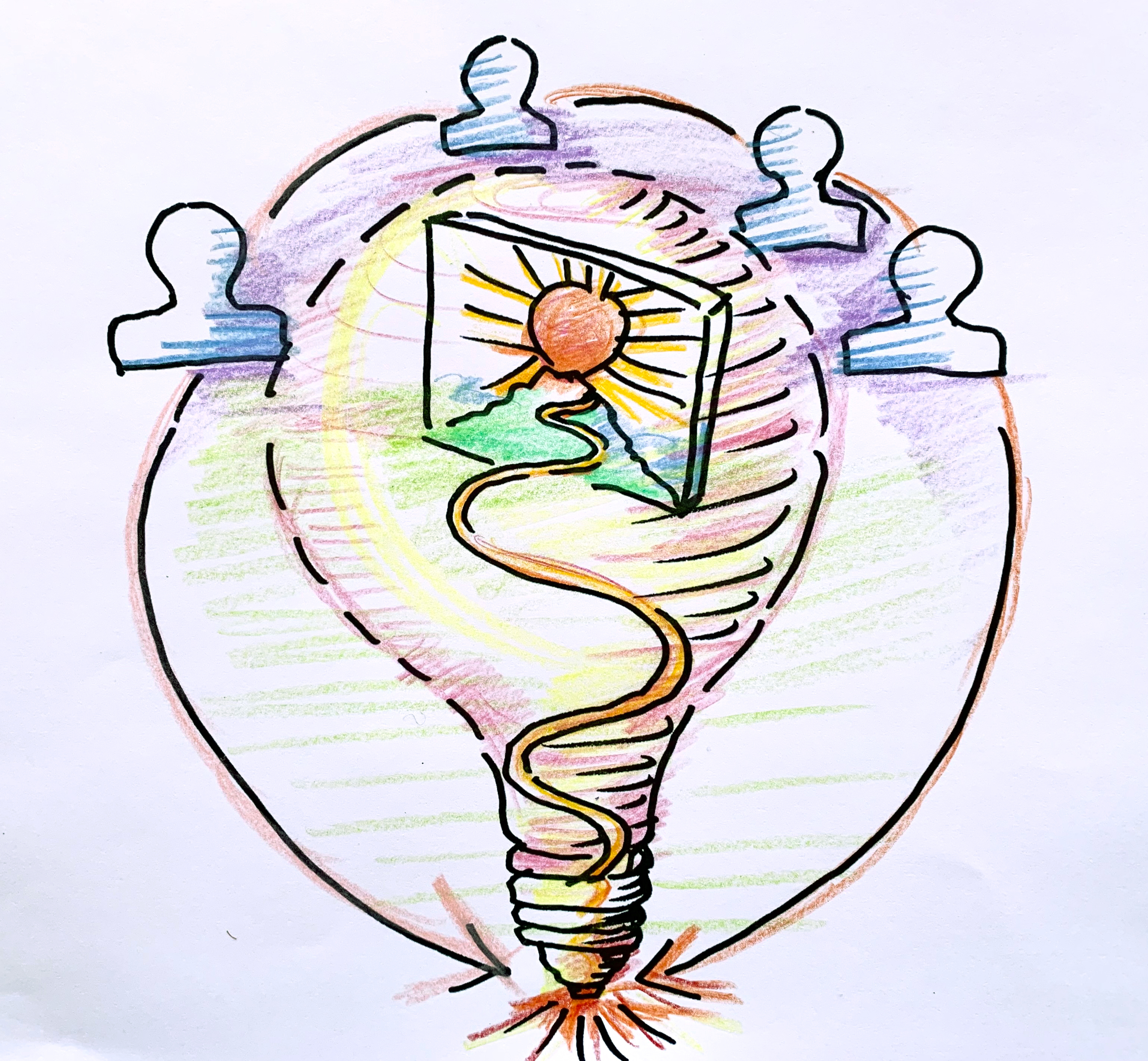
Something in your organization is ready to move.
If someone pointed you here, they probably told you this work goes deeper than the presenting issue. That's accurate. What they may not have mentioned is how much of what you're looking for is already present in your current context.
The shift being asked for is real. So is the possibility on the other side of it.
The problems that bring people here
The leaders who call me tend to arrive with a particular kind of problem: one on which they've already invested a ton of energy.
The strategic plan adopted new initiatives, yet the organization keeps doing things the way it did before.
The leadership team shares a vocabulary ("integrated," "mission-driven," "responsive") and, it turns out, not at all the same picture of purpose and possibility.
The finance conversation and the mission conversation happen separately.
Your development and advancement leaders are being asked by donors for impact evidence while the board isn't even asking for it yet.
Consolidation, once hypothetical, is now a live question, and looking more likely every quarter.
Mid-level managers are burning out, and the question of where the next senior leaders will come from is no longer abstract.
The board agrees it needs to become a learning community, and its meetings look exactly the way they did before.
Planners call these wicked problems: the stakeholders don't agree on what the problem is, and every solution changes it. You've probably tried a few remedies already. Some helped. What they reached was the visible part. The part that persisted lives at a deeper level.
The quieter question
Some of the leaders I work with carry a question they don't voice in the boardroom. Am I the one to find the breakthrough? Will the board (or the CEO) give me the runway? Is this organization capable of the shift, or are we only talking about it?
Capable, yes. Usually more capable than it looks from the inside.
Organizations produce what they're designed to produce, and most of that design lives beneath the waterline, in the beliefs and relational patterns that shape a decision before anyone makes it. That's where the wicked problems live. It's also where the capacity you're looking for tends to be found, waiting on better questions.
What partnership looks like
Every engagement is designed for the situation it serves, the way a thoughtful architect begins with how the family actually lives before drawing a single line. What stays constant comes down to three things.
Different questions.
What is working at its best here, and why? What are people quietly hoping for that no one has put on an agenda? What would have to be true for the ambition to be realistic? Questions like these surface the strengths a team has stopped noticing and the futures it hasn't let itself name.
Listening for the unspoken possibility.
The most important information in an organization arrives sideways: in a pause, in the thing said after the meeting ends. Bringing it back into the room, with care, is how a team discovers that the possibility it hadn't named was already half-formed among them.
Walking alongside through the shift.
What produces traction and learning is what happens on the ordinary Tuesdays afterward, when a new orientation meets old habits. So the partnership continues into implementation: as counsel, as thinking partner, and sometimes as the person who remembers what you said you wanted and why you thought it important in the first place.
What shifts
Clear direction your team believes in.
Created by the people who will live it, and the reference point for every decision after.
Unified culture and unified strategy
When what the organization says and does finally match, the energy once spent on friction becomes available for mission and innovation.
Energized, distributed ownership.
Leaders no longer carry all the weight. People bring their full intelligence to shared challenges because they helped shape the solutions.
Momentum donors want to support.
Authentic alignment is visible from the outside, and it invites investment.
Let's Find Out Together
The best way to learn whether there's a fit is a real conversation about what you most want to accomplish.
If we work together, we'll co-design the engagement so there are no surprises.
If we don't, you'll still leave with something useful.
Tell me what you're carrying. We'll go from there.