
The Flourishing Framework
A Shared Practice for Senior Leadership Teams
An eight-month engagement for a CEO or president and their leadership team, cultivating the invisible architecture of change together.
Waiting for the Weather
Nearly every leader I talk with describes a steady array of forces arriving from outside the organization, none of them chosen and most of them beyond anyone's control.
The word I hear most often is overwhelm. The second is uncertainty.
Waiting for the picture to clarify can look like the sensible move. In my experience, it usually disappoints. The weather is the weather.
And something quieter happens to a senior team during a long wait. People retreat into their own functions, and meetings become a sequence of reports.
When someone leaves, what they take with them turns out to have lived in one head. Capacity that was never shared cannot be succeeded.
What a Senior Team Can Become
This engagement exists for a CEO or president who wants something particular for the people around the table.
Real cohesion.
A team that can disagree substantively and come out the other side more aligned than when it went in.
Organizational bilingualism.
Fluency in the language of predictability and managed risk, and in the language of agency, learning, and possibility. A team that holds both stays credible with the people who worry while making room for the people who imagine.
Capacity across the whole table.
When the capacity for positive change lives in many people, succession becomes a transition instead of a rupture.
Conditions for change, co-created.
Organizations reliably produce what they are designed to produce, and the design lives mostly below the waterline. Those beliefs, assumptions, and habits belong to the people inside, which makes them the one place no headwind can reach.
For mission-driven organizations competing for the same donors and the same talent, this is also where a durable distinctive comes from.
Programs get copied within a season. A senior team that works this way is slow to build and nearly impossible to imitate.
Your Real Work Is the Material
The initiative you are about to launch, the conversation that keeps stalling, the strategic questions on your plate this year: that is what we work on together.
The orientation throughout is appreciative. Your team spends more time on what is already working in your organization, and on the invisible conditions that keep producing it, than on what is broken.
The practices arrive as a way of doing that work differently, and the absorption happens in the doing.
And your organization speaks before I do.
The Engagement Arc
The engagement unfolds across about eight months, in five phases, with our coaching together running alongside all of it.
Along the way, your team works in each of the Framework's five practice fields: Mindset, Activate, Reimagine, Leverage, and Adaptation.
THE OPENING WEEKS
1. Organizational Listening
For five weeks, an open channel called the Athmos Pulse invites people across your organization to speak anonymously, in their own words.
Alongside it, I hold one-on-one conversations with you and with each member of your senior team.
Framework in play: Mindset • Activate
A TWO-DAY RETREAT
2. Seeing the System Together
Day one builds psychological safety paired with high standards, and only then does your team meet its own listening data.
Day two looks beneath the numbers, toward the invisible architecture that keeps producing them.
Framework in play: Activate • Mindset • Reimagine
ABOUT NINETY DAYS
3. The Practice Fields
These ninety days ask more of each leader than anything else in the engagement, and they put the least on your team's shared calendar. Each leader's work is first and foremost inner work, best done initially in one-on-ones with me rather than with peers.
Your team practices deliberately in real meetings, on real decisions, with real consequences.
I work individually with each leader on the hidden commitments that hold a current way of working in place. We reconvene by video to work live cases, including the attempts that did not go as hoped.
Framework in play: Mindset • Adaptation • Leverage
A SECOND TWO-DAY RETREAT
4. Planning from Strength
Your team harvests what it tried. We look at what fell short, and we mine the attempts that worked for the invisible conditions beneath them. That is where adaptive capacity grows. I then introduce scenario thinking: what it reveals that conventional planning leaves out, and how adaptive muscle develops.
Day two is a full working session on your live strategic material, organized around strengths, opportunities, aspirations, and results.
Your team leaves with strategic work it built itself.
Framework in play: Reimagine • Adaptation
THE CLOSING MONTHS
5. Embedding and Evidence
Your team writes its own operating protocols, in its own language, so the practices become how you actually operate.
How an organization invites donors into its work turns out to be a remarkably accurate reading of how it invites its own people. We look at what yours reveals.
Your team then assembles the evidence of what changed, structured against the original listening, in a form worthy of sharing proudly with your board chair, with no translation needed.
We close by returning to the Framework whole.
Framework in play: Adaptation • Leverage • all five together
THROUGHOUT
Your Own Coaching
You and I work privately, on a rhythm that suits you, beginning before your team's work begins.
OPTIONAL, ABOUT A YEAR LATER
A Second Listening
You can open the channel again and let your organization answer for itself.
The People Alongside Me
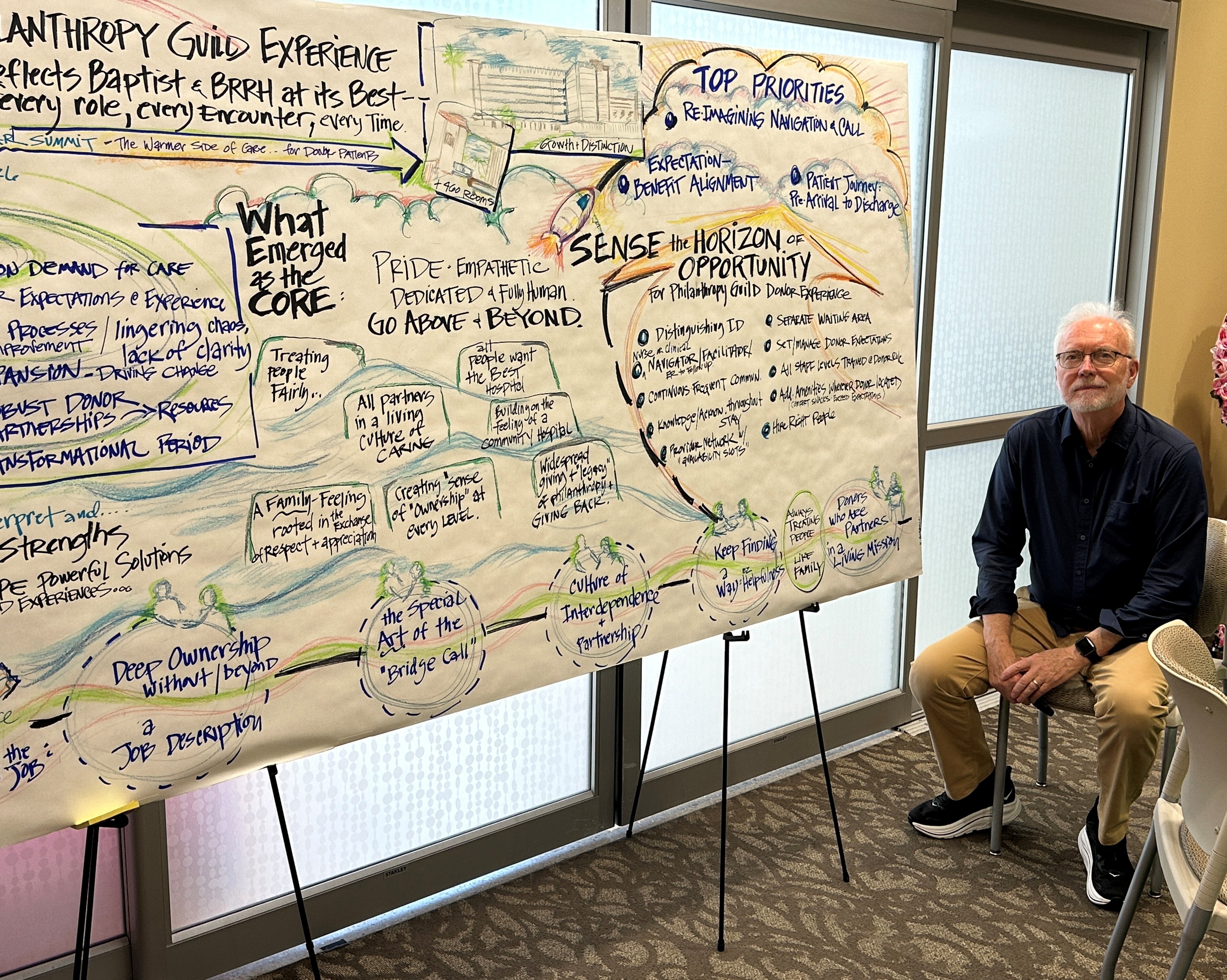
Ken Hubbell, visual storyboarding
My brother and longtime collaborator storyboards both retreats live.
He captures the ideas as they emerge, the tensions as they surface, and the moments of recognition that move through a group and then disappear unless someone holds them.
Across both retreats, what he creates becomes a visual record of your emerging change architecture, which your organization keeps as large-format wall pieces and bound coffee-table books. It is another way we seek to make the invisible visible.
Three years from now, a new vice president stands in front of that storyboard and understands, quickly, where this team has been and what it built. In a difficult moment, the team returns to it and remembers navigating something like this before.
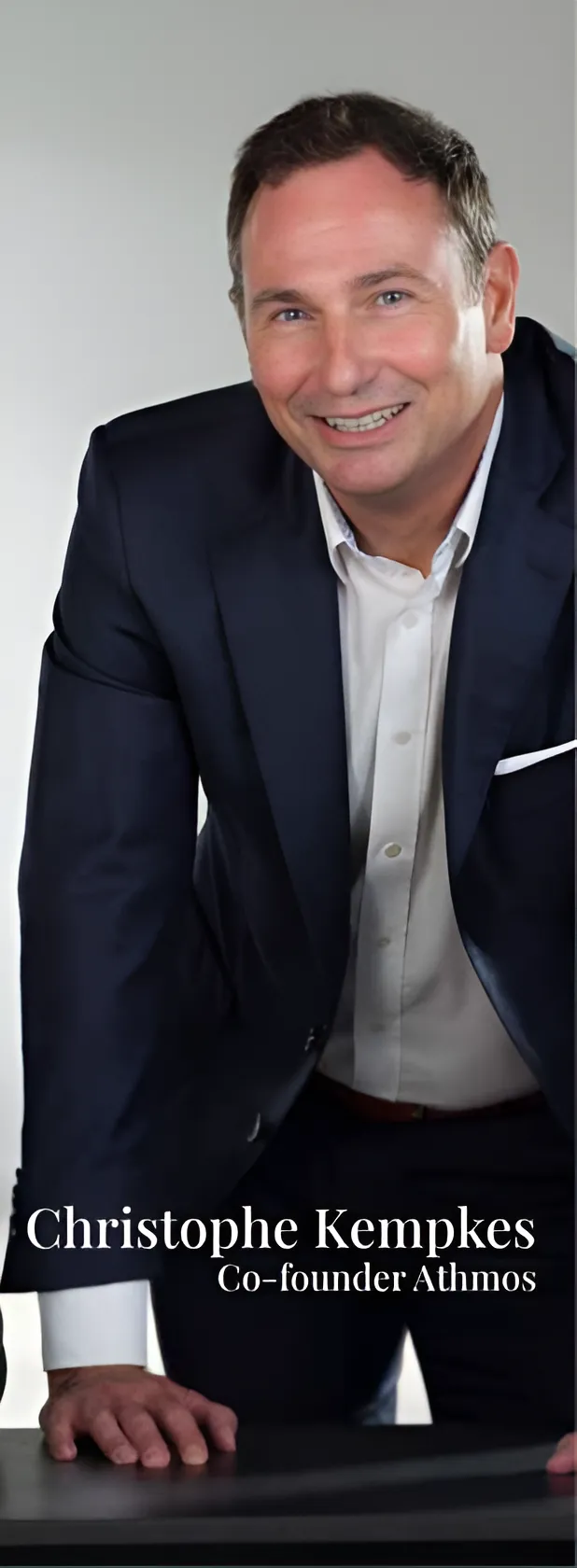
Christophe Kempkes, the Athmos Pulse
The way a single question helps make the invisible visible is the pure brilliance of the Athmos Pulse. Christophe and his team have designed the Pulse in a way that makes perfect sense to jumpstart our discussion of your organizational context becoming a truly flourishing environment.
Check out this short video.
What This Asks
This engagement works when a CEO gives it the same standing as a revenue strategy, a governance decision, a culture initiative, or the articulation of strategic direction.
It builds what Margaret Wheatley calls coherence, and coherence is the scaffolding those four hold.
Your own commitment is the largest at the table. It includes going first in front of the people who report to you, taking the organizational listening unfiltered, including whatever it says about your own leadership, and protecting the middle months when something urgent competes for that time.
The rest of the load is mine.
Where This Tends to Fit
Much of my work has been with mission-driven institutions in higher education and healthcare, along with nonprofits and foundations serving the public trust.
The organizations that choose this engagement tend to be larger and more complex. Sometimes the right setting is a distinct unit within a larger system, such as a foundation serving a health system or a university.
It tends to work best when:
- The CEO/president brings genuine curiosity about their own interior condition as a leader.
- The senior team is intact, with no major restructuring imminent.
- The organization faces a strategic moment that asks for more than a tactical response.
- There is readiness for honest conversation about what sits below the surface.
Our first conversation is as much about discernment as discovery, for both of us. If the fit is not there, I would like us both to know early.
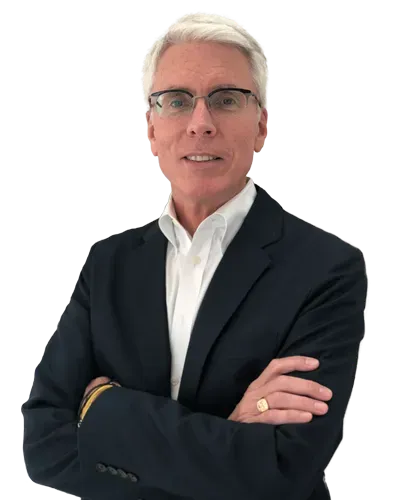
The Career Behind the Framework
For more than forty years, I have worked alongside hospital CEOs, university presidents, foundation executives, and social-sector innovators as a strategist, facilitator, and thought partner. The last twenty of those years have been in independent practice.
One sentence has been my true north the whole way: the soft stuff is the hard stuff.
That conviction carried me into appreciative inquiry, with certification from the Weatherhead School of Management at Case Western Reserve University and into competence in complexity, with certification from the International Futures Forum. It also carried me into the work of Kegan and Lahey, Edmondson, Scharmer, Sharpe, Wheatley, Cashman, and more.
This engagement is the fullest expression of what a career alongside remarkable leaders has taught me to trust.
A First Conversation
A first conversation is a genuine inquiry into your team's situation, what you have already tried, and where the real readiness lives.
If this page describes your team or your moment, that conversation is a natural next step. And if you would like to explore the engagement more fully first, I welcome a note or a call.
Email: [email protected]
Phone: 414-899-3157
Additionally, if you’d like a fuller description of this engagement design so you can begin rehearsing in your mind how our partnership might unfold, download the overview here.
© Copyright 2026. Gary Hubbell Consulting. All Rights Reserved.